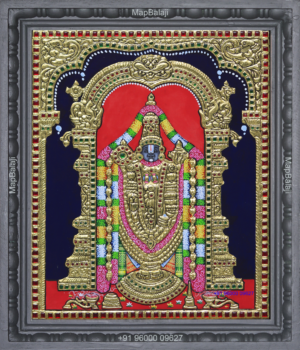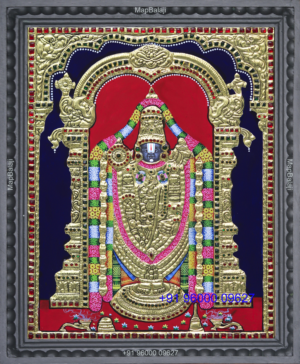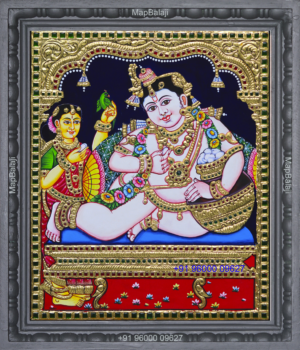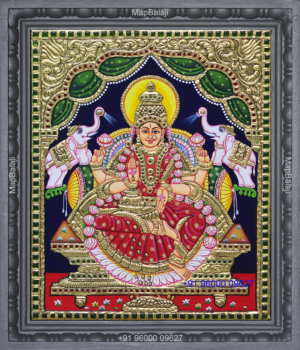


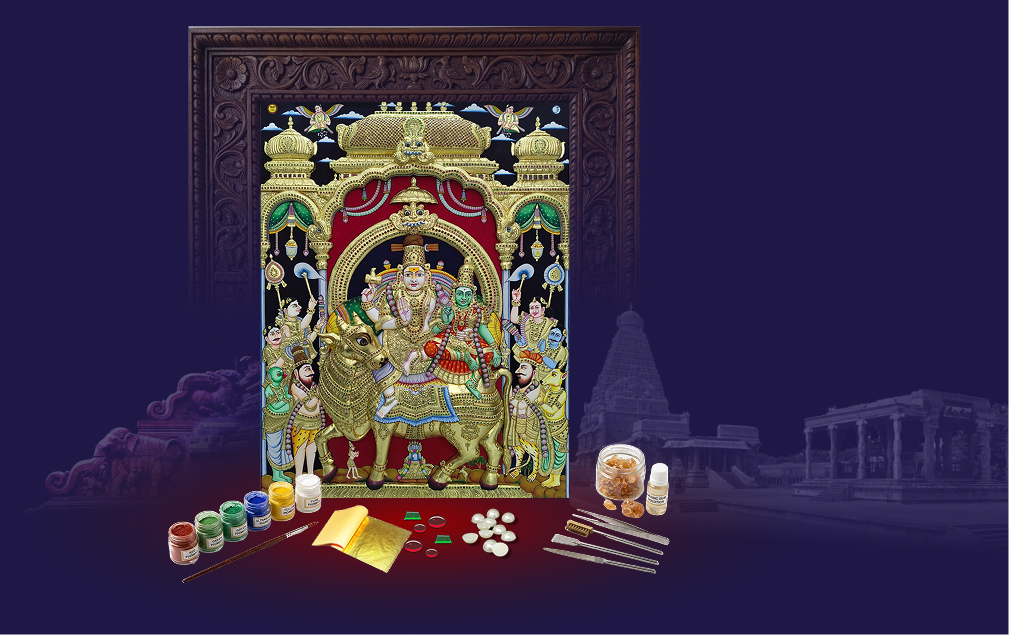
22ct Gold Foil

Jaipur Stones

American Diamonds

Half Pearls

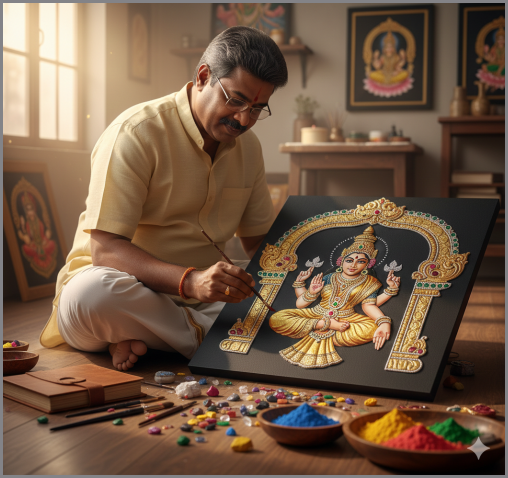
Rajendran Artist

“Master Artist and Third-Generation of Thanjavur
Painting Artist “

As a preeminent Tanjore artist with a three-generation legacy, Rajendran is recognized by Google India for his dedication to the craft. Featured in a Google India Chrome campaign, his work highlights the intersection of heritage art and digital innovation, showcasing his vital role in reviving this traditional form for the modern era.

Collections

A Royal Heritage of Prestige

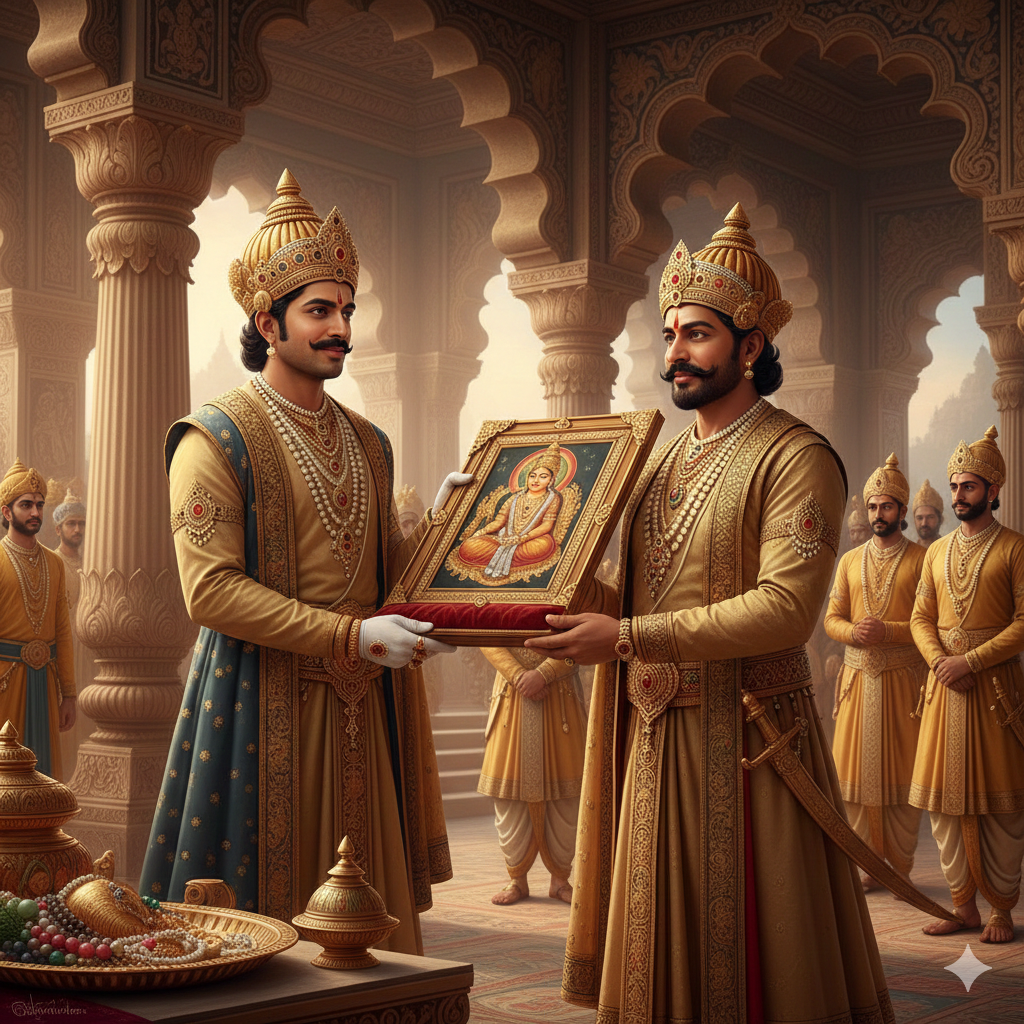
“A Tanjore painting serves as a distinguished token of honor for both the giver and the recipient.”

The history of this art form is rooted in royal diplomacy. Historically, kings exchanged gold, diamonds, and precious gemstones as tokens of honor. Over time, these precious materials were integrated into paintings to create exquisite royal keepsakes. These masterpieces served not only as spiritual icons but also as symbols of the ruler’s prestige and enduring legacy.

Traditional Process and Methods

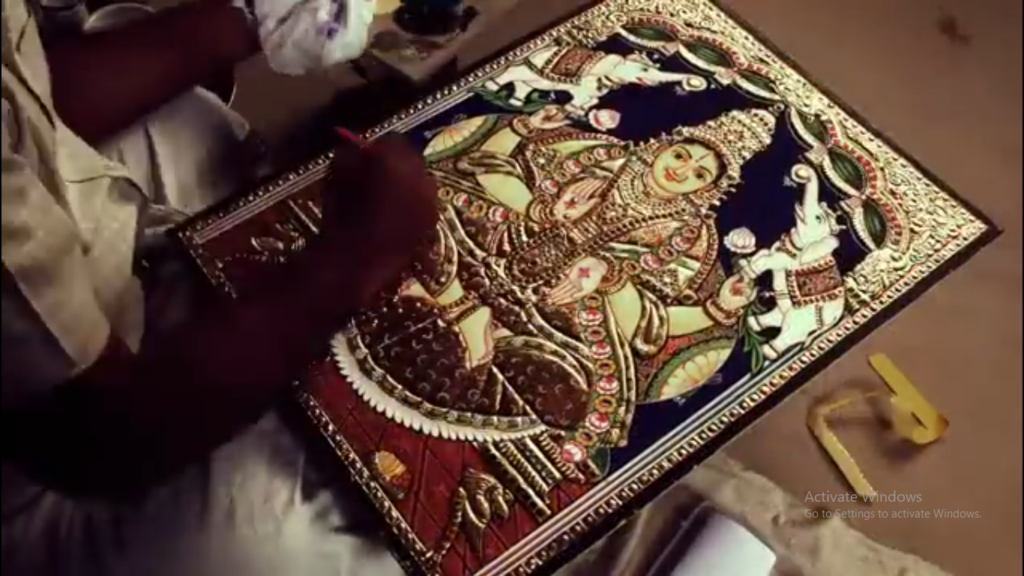
Thanjavur paintings are panel paintings done on wooden planks, and hence referred to as palagaipadam (palagai = "wooden plank"; padam = "picture") in local parlance.
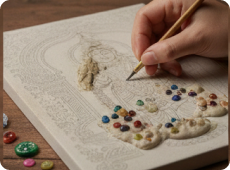
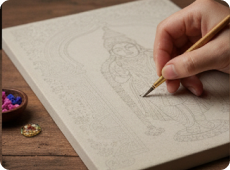
Fundamental Art work starts here where we draw the outline of the Subject we intend to do.  The outline of the painting is drawn after which stone work marking is done.
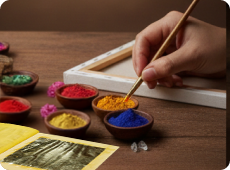
Mukk work is done to bring an embossing effect in the painting which is  done with mixture of Tanjore painting lime stone powder and Arabic Gum.
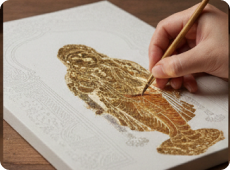
After this we paste the 22ct Pure gold foils over the Mukk work and Brush design work. The gold foil is cut into suitable shape and size to suit the painting design and will be pasted using Gum Arabic.
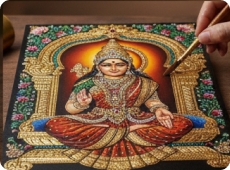
Here we start the colouring work, where we do the body colouring  with the colour suitable for the subject to create the base.After Body colouring, we start with washing work.